Cervical Cancer: Radiation Therapy Overview
English Version
Radiation therapy is a cornerstone in the treatment of cervical cancer, particularly for patients with locally advanced disease. It is often used in combination with chemotherapy (chemoradiation) to enhance treatment effectiveness.
1. Indications for Radiation Therapy
- Definitive Chemoradiation: Radiation therapy combined with chemotherapy is the standard of care for patients with locally advanced cervical cancer (stages IB2 to IVA). It is also used for patients with early-stage disease who are not surgical candidates or who refuse surgery.
- Postoperative (Adjuvant) Radiation Therapy: Radiation therapy may be recommended after surgery (such as a hysterectomy) for patients with high-risk features like positive surgical margins, lymph node involvement, or parametrial invasion, to reduce the risk of recurrence.
- Neoadjuvant Radiation Therapy: Although less common, radiation therapy may be used before surgery to shrink the tumor and make it more resectable.
- Palliative Radiation Therapy: In cases of advanced or metastatic cervical cancer, radiation therapy is used to relieve symptoms such as pain, bleeding, or urinary obstruction.
2. Treatment Field
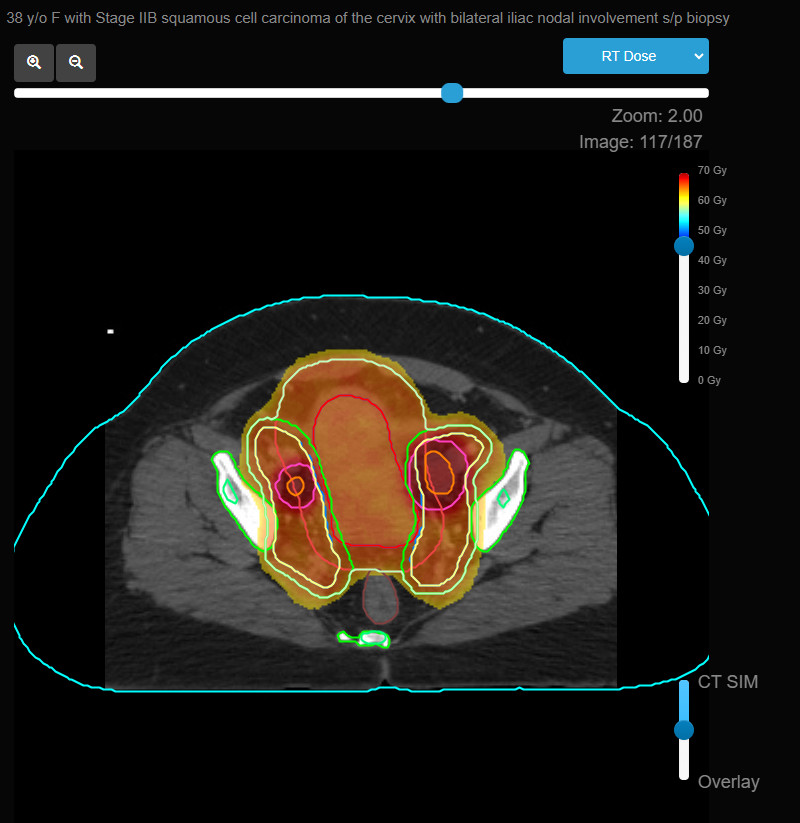
- Pelvic Radiation: The standard radiation field includes the entire pelvis, encompassing the primary tumor, cervix, uterus, parametria, and upper third of the vagina, as well as the regional lymph nodes, including the obturator, external iliac, internal iliac, and presacral nodes.
- Extended Field Radiation: In cases where there is para-aortic lymph node involvement, the radiation field may be extended to include the para-aortic lymph nodes.
- Brachytherapy: Intracavitary brachytherapy is a key component of definitive treatment for cervical cancer. It delivers a high dose of radiation directly to the tumor while sparing surrounding healthy tissues. This is usually combined with external beam radiation therapy (EBRT).
3. Radiation Dose
- Definitive Chemoradiation: The external beam radiation therapy (EBRT) dose is typically 45-50.4 Gy delivered in 1.8-2 Gy fractions over 5-6 weeks. Brachytherapy follows, with a dose of 30-40 Gy delivered to the tumor in 4-5 fractions, depending on tumor size and response to initial treatment.
- Postoperative Radiation Therapy: The postoperative dose typically ranges from 45-50.4 Gy in 1.8-2 Gy fractions over 5-6 weeks. A boost to the tumor bed or involved lymph nodes may be delivered if necessary, adding 5-10 Gy.
- Palliative Radiation Therapy: Palliative doses are lower, typically ranging from 20-30 Gy in 5-10 fractions, depending on the symptoms and goals of care.
4. Treatment Techniques
- External Beam Radiation Therapy (EBRT): EBRT uses advanced imaging techniques such as CT or MRI to create a three-dimensional map of the pelvis, allowing precise targeting of the tumor while minimizing exposure to surrounding organs like the bladder, rectum, and small bowel.
- Intensity-Modulated Radiation Therapy (IMRT): IMRT is often used to deliver more precise doses of radiation, reducing the risk of side effects by sparing healthy tissues.
- Brachytherapy: Brachytherapy involves placing a radiation source directly into or near the tumor, allowing a high dose of radiation to be delivered directly to the cancer while sparing nearby organs. It is a critical component of cervical cancer treatment, particularly for locally advanced cases.
5. Side Effects
- Acute Effects: Common acute side effects include fatigue, diarrhea, urinary frequency and urgency, dysuria (painful urination), and vaginal irritation or discharge. Skin reactions in the pelvic area may also occur.
- Late Effects: Potential long-term side effects include chronic radiation proctitis, cystitis, vaginal stenosis, bowel obstruction, and, in rare cases, fistula formation. Sexual dysfunction and lymphedema are also possible.
6. Follow-up
- Imaging: Regular follow-up with imaging studies such as CT, MRI, or PET/CT is essential to monitor treatment response and detect any signs of recurrence.
- Clinical Examination: Frequent pelvic examinations are necessary to assess for residual disease or recurrence, as well as to monitor and manage treatment side effects.
- Management of Late Effects: Long-term follow-up is necessary to manage late effects such as bowel or bladder dysfunction, sexual health issues, and to monitor for secondary cancers.
Korean Version
자궁경부암에 대한 방사선 치료는 특히 국소 진행성 질환에서 중요한 치료법입니다. 방사선 치료는 종종 화학 요법과 병행하여 치료 효과를 높입니다.
1. 방사선치료 적응증
- 정확한 화학방사선 치료: 방사선 치료와 화학 요법을 결합한 치료는 국소 진행성 자궁경부암(IB2기에서 IVA기)의 표준 치료법입니다. 또한 수술이 적합하지 않거나 수술을 거부하는 초기 단계의 환자에게도 사용됩니다.
- 수술 후(보조) 방사선 치료: 수술(예: 자궁절제술) 후 양성 절제 변연, 림프절 침범, 또는 자궁주위 침윤과 같은 고위험 특징이 있는 환자에게 방사선 치료가 권장되며, 재발 위험을 줄이는 데 도움을 줍니다.
- 수술 전(신보조) 방사선 치료: 덜 일반적이지만, 종양을 축소하여 수술이 가능하도록 하기 위해 수술 전에 방사선 치료가 사용될 수 있습니다.
- 완화 방사선 치료: 진행성 또는 전이성 자궁경부암의 경우, 방사선 치료는 통증, 출혈, 또는 배뇨 폐쇄와 같은 증상을 완화하기 위해 사용됩니다.
2. 치료 범위
- 골반 방사선: 표준 방사선 치료 범위에는 자궁경부, 자궁, 자궁주위 조직, 질 상부 3분의 1, 및 외부 장골, 내부 장골, 폐쇄, 및 천골 전 림프절을 포함한 지역 림프절을 포함한 골반 전체가 포함됩니다.
- 확장된 방사선: 대동맥 주변 림프절 침범이 있는 경우, 방사선 치료 범위가 대동맥 주변 림프절을 포함하도록 확장될 수 있습니다.
- 근접 치료(브라키테라피): 근접 치료는 자궁경부암의 결정적 치료의 핵심 요소입니다. 이 방법은 종양에 직접 방사선을 전달하여 주변 건강한 조직을 보호합니다. 이는 일반적으로 외부 빔 방사선 치료(EBRT)와 결합됩니다.
3. 방사선 선량
- 정확한 화학방사선 치료: 외부 빔 방사선 치료(EBRT) 선량은 일반적으로 5-6주 동안 1.8-2 Gy로 분할된 45-50.4 Gy입니다. 근접 치료는 종양 크기 및 초기 치료에 대한 반응에 따라 4-5회 분할로 30-40 Gy를 추가로 전달합니다.
- 수술 후 방사선 치료: 수술 후 선량은 보통 5-6주 동안 1.8-2 Gy로 분할된 45-50.4 Gy 범위입니다. 필요한 경우 종양 침상 또는 관련 림프절에 5-10 Gy의 부스트가 추가될 수 있습니다.
- 완화 방사선 치료: 완화 방사선 치료의 경우, 증상과 치료 목표에 따라 일반적으로 5-10회 분할로 20-30 Gy의 낮은 선량이 사용됩니다.
4. 치료 기법
- 외부 빔 방사선 치료(EBRT): EBRT는 CT 또는 MRI와 같은 고급 영상 기술을 사용하여 골반의 3차원 지도를 생성하여, 종양을 정확하게 목표로 하고 방광, 직장, 소장과 같은 주변 장기에 대한 노출을 최소화합니다.
- 강도 변조 방사선 치료(IMRT): IMRT는 더 정밀한 방사선 선량을 전달할 수 있어, 건강한 조직에 대한 부작용을 줄이는 데 도움을 줍니다.
- 근접 치료(브라키테라피): 근접 치료는 방사선 소스를 종양 근처 또는 내부에 배치하여 주변 장기를 보호하면서 암에 고선량의 방사선을 전달하는 방법입니다. 이는 특히 국소 진행성 자궁경부암 치료에 중요한 요소입니다.
5. 부작용
- 급성 부작용: 일반적인 급성 부작용으로는 피로, 설사, 빈뇨 및 급뇨, 배뇨통, 질 자극 또는 분비물이 포함됩니다. 골반 부위의 피부 반응도 발생할 수 있습니다.
- 지연된 부작용: 장기적인 부작용으로는 만성 방사선 직장염, 방광염, 질 협착, 장 폐쇄, 그리고 드물게 누공 형성이 포함될 수 있습니다. 성기능 장애와 림프부종도 발생할 수 있습니다.
6. 추적 관리
- 영상 검사: 치료 반응을 모니터링하고 재발 징후를 감지하기 위해 CT, MRI 또는 PET/CT와 같은 영상 검사를 통한 정기적인 추적 검사가 필수적입니다.
- 임상 검사: 잔여 질병이나 재발을 평가하고 치료 부작용을 관리하기 위해 빈번한 골반 검사가 필요합니다.
- 지연된 부작용 관리: 장기적인 추적 관리는 장이나 방광 기능 장애, 성 건강 문제를 관리하고, 이차 암을 모니터링하기 위해 필요합니다.


Cervical Cancer: Radiation Therapy Overview
English Version
Radiation therapy is a cornerstone in the treatment of cervical cancer, particularly for patients with locally advanced disease. It is often used in combination with chemotherapy (chemoradiation) to enhance treatment effectiveness.
1. Indications for Radiation Therapy
2. Treatment Field
3. Radiation Dose
4. Treatment Techniques
5. Side Effects
6. Follow-up
Korean Version
자궁경부암에 대한 방사선 치료는 특히 국소 진행성 질환에서 중요한 치료법입니다. 방사선 치료는 종종 화학 요법과 병행하여 치료 효과를 높입니다.
1. 방사선치료 적응증
2. 치료 범위
3. 방사선 선량
4. 치료 기법
5. 부작용
6. 추적 관리