Male Urethral Cancer: Comprehensive Overview
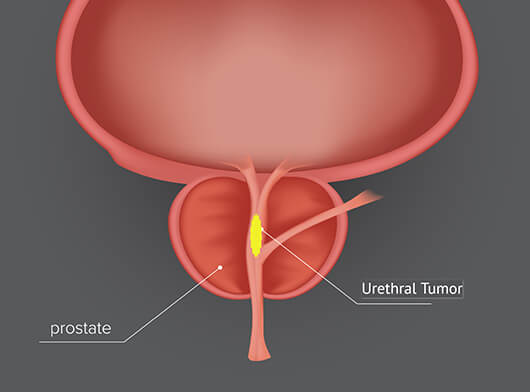
Definition 정의
English: Male urethral cancer is a rare malignancy that originates in the urethra, the tube that carries urine from the bladder to the outside of the body. It can occur anywhere along the length of the urethra and is often associated with a poor prognosis due to late diagnosis.
Korean: 남성 요도암은 방광에서 체외로 소변을 운반하는 관인 요도에서 발생하는 드문 악성 종양입니다. 요도의 어느 부위에서나 발생할 수 있으며, 늦게 진단되는 경우가 많아 예후가 좋지 않습니다.
Risk Factors 위험 요소
English:
- Age: Most common in men over 60.
- Chronic urinary tract infections: Recurrent infections increase the risk.
- Human papillomavirus (HPV) infection: Particularly high-risk strains.
- History of bladder cancer: Previous bladder cancer increases the risk.
- Urethral strictures: Chronic irritation and inflammation.
- Smoking: Increases the risk of developing urethral cancer.
Korean:
- 연령: 60세 이상의 남성에게 가장 흔합니다.
- 만성 요로 감염: 재발하는 감염이 위험을 증가시킵니다.
- 인유두종바이러스(HPV) 감염: 특히 고위험 균주.
- 방광암 병력: 이전 방광암이 있는 경우 위험이 증가합니다.
- 요도 협착: 만성 자극과 염증.
- 흡연: 요도암 발병 위험을 증가시킵니다.
Incidence 발생 빈도
English: Male urethral cancer is extremely rare, accounting for less than 1% of all cancers in men. It is more commonly diagnosed in older men and is often detected at an advanced stage.
Korean: 남성 요도암은 매우 드물며, 남성의 전체 암의 1% 미만을 차지합니다. 주로 노년 남성에게서 더 흔하게 진단되며, 종종 진행된 단계에서 발견됩니다.
Pathology 병리 소견
English: Male urethral cancer is classified based on histology:
- Squamous cell carcinoma: The most common type, arising from the squamous cells lining the urethra.
- Transitional cell carcinoma: Originates from the cells lining the bladder and urethra.
- Adenocarcinoma: Arises from glandular cells within the urethra.
Korean: 남성 요도암은 조직학에 따라 분류됩니다:
- 편평 세포 암종: 요도 내벽의 편평 세포에서 발생하는 가장 흔한 유형입니다.
- 이행 세포 암종: 방광과 요도의 내벽 세포에서 발생합니다.
- 선암: 요도 내 샘 세포에서 발생합니다.
Clinical Manifestation 임상 소견
English:
- Early stage: May include symptoms such as dysuria, hematuria, and frequent urination.
- Advanced stage: Symptoms include urinary obstruction, palpable mass, pelvic pain, and incontinence.
Korean:
- 초기 단계: 배뇨 곤란, 혈뇨, 빈뇨 등의 증상이 포함될 수 있습니다.
- 말기 단계: 배뇨 장애, 만져지는 종괴, 골반 통증 및 요실금 등의 증상이 포함됩니다.
Diagnosis 진단
English:
- Physical examination: Initial physical examination to detect abnormalities.
- Urinalysis: To detect blood or other abnormalities in urine.
- Cystoscopy: Visual examination of the urethra and bladder using a cystoscope.
- Biopsy: Removal of tissue samples for histological examination to confirm the diagnosis.
- Imaging: MRI, CT scans, and PET scans to assess the extent of the disease and check for metastasis.
Korean:
- 신체 검사: 이상을 감지하기 위한 초기 신체 검사.
- 소변 검사: 소변 내 혈액 또는 다른 이상을 감지하기 위해.
- 방광경 검사: 방광경을 사용하여 요도와 방광을 시각적으로 검사합니다.
- 생검: 진단을 확인하기 위해 조직 샘플을 제거하여 조직학적 검사.
- 영상 검사: 질병의 범위를 평가하고 전이를 확인하기 위해 MRI, CT 스캔 및 PET 스캔.
TNM Stage 병기
Stage Description Explanation
| T | Tumor | Size and extent of the primary tumor |
| TX | Primary tumor cannot be assessed |
|
| T0 | No evidence of primary tumor |
|
| Tis | Carcinoma in situ |
|
| T1 | Tumor invades subepithelial connective tissue |
|
| T2 | Tumor invades corpus spongiosum or periurethral muscle |
|
| T3 | Tumor invades corpus cavernosum, anterior vagina, or periurethral muscle |
|
| T4 | Tumor invades adjacent organs or through the kidney into the perinephric fat |
|
Stage Description Explanation
| N | Nodes | Degree of spread to regional lymph nodes |
| NX | Regional lymph nodes cannot be assessed |
|
| N0 | No regional lymph node metastasis |
|
| N1 | Metastasis in a single lymph node 2 cm or less in greatest dimension |
|
| N2 | Metastasis in a single lymph node more than 2 cm but not more than 5 cm, or in multiple lymph nodes, none more than 5 cm |
|
| N3 | Metastasis in a lymph node more than 5 cm in greatest dimension |
|
Stage Description Explanation
| M | Metastasis | Presence of distant metastasis |
| M0 | No distant metastasis |
|
| M1 | Distant metastasis is present |
|
Staging Groupings 종합 병기
Combining the T, N, and M classifications, male urethral cancer can be staged as follows:
Stage 0
- Tis, N0, M0: Carcinoma in situ.
Stage I
Stage II
Stage III
Stage IV
- Stage IVA:
- T4, Any N, M0
- Any T, N2-N3, M0
- Stage IVB:
Treatment 치료
English:
- Surgery: Primary treatment, including transurethral resection, partial urethrectomy, and radical urethrectomy with possible bladder removal.
- Radiotherapy: Used as primary treatment or adjuvant therapy post-surgery.
- Chemotherapy: Often used in combination with radiotherapy for advanced or metastatic disease.
- Targeted therapy: Emerging treatment for specific genetic mutations or molecular targets.
- Immunotherapy: Investigated for advanced cases.
Korean:
- 수술: 주요 치료법으로, 요도경을 통한 절제술, 부분 요도 절제술 및 방광 제거를 포함한 근치적 요도 절제술 등이 포함됩니다.
- 방사선 치료: 주된 치료 또는 수술 후 보조 요법으로 사용됩니다.
- 화학 요법: 진행성 또는 전이성 질환에 대해 방사선 요법과 함께 자주 사용됩니다.
- 표적 치료: 특정 유전적 돌연변이 또는 분자 표적에 대한 신흥 치료법.
- 면역 요법: 진행된 사례에 대한 연구 중인 치료법.
Prognosis Based on TNM Stage 병기별 예후
English:
- Stage I:
- 5-Year Survival Rate: Approximately 60-80%.
- Local Recurrence Rate: Low.
- Distant Metastasis: Rare.
- Stage II:
- 5-Year Survival Rate: Approximately 40-60%.
- Local Recurrence Rate: Moderate.
- Distant Metastasis: Possible.
- Stage III:
- 5-Year Survival Rate: Approximately 20-40%.
- Local Recurrence Rate: High.
- Distant Metastasis: Common.
- Stage IV:
- 5-Year Survival Rate: Less than 20%.
- Local Recurrence Rate: Very high.
- Distant Metastasis: Very common.


Male Urethral Cancer: Comprehensive Overview
Definition 정의
English: Male urethral cancer is a rare malignancy that originates in the urethra, the tube that carries urine from the bladder to the outside of the body. It can occur anywhere along the length of the urethra and is often associated with a poor prognosis due to late diagnosis.
Korean: 남성 요도암은 방광에서 체외로 소변을 운반하는 관인 요도에서 발생하는 드문 악성 종양입니다. 요도의 어느 부위에서나 발생할 수 있으며, 늦게 진단되는 경우가 많아 예후가 좋지 않습니다.
Risk Factors 위험 요소
English:
Korean:
Incidence 발생 빈도
English: Male urethral cancer is extremely rare, accounting for less than 1% of all cancers in men. It is more commonly diagnosed in older men and is often detected at an advanced stage.
Korean: 남성 요도암은 매우 드물며, 남성의 전체 암의 1% 미만을 차지합니다. 주로 노년 남성에게서 더 흔하게 진단되며, 종종 진행된 단계에서 발견됩니다.
Pathology 병리 소견
English: Male urethral cancer is classified based on histology:
Korean: 남성 요도암은 조직학에 따라 분류됩니다:
Clinical Manifestation 임상 소견
English:
Korean:
Diagnosis 진단
English:
Korean:
TNM Stage 병기
Stage Description ExplanationStaging Groupings 종합 병기
Combining the T, N, and M classifications, male urethral cancer can be staged as follows:
Stage 0
Stage I
Stage II
Stage III
Stage IV
Treatment 치료
English:
Korean:
Prognosis Based on TNM Stage 병기별 예후
English:
Korean:
Radiotherapy in Male Urethral Cancer 남성 요도암의 방사선치료
English:
Korean:
References 근거 자료