Vulvar Cancer: Comprehensive Overview
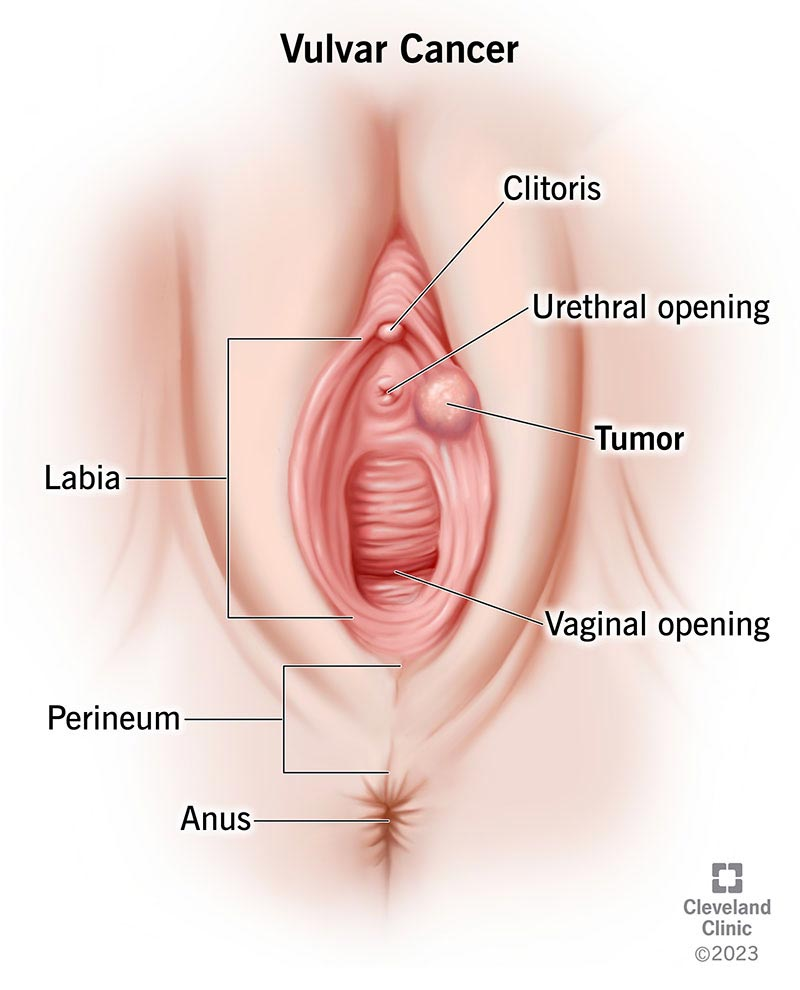
Definition 정의
English: Vulvar cancer is a malignant tumor that originates in the external female genitalia, including the labia majora, labia minora, clitoris, and the vestibule of the vagina. It is a rare gynecologic cancer, accounting for about 5% of all gynecologic malignancies.
Korean: 여성 외부 생식기암은 대음순, 소음순, 음핵, 질의 전정 등을 포함한 여성 외부 생식기에서 발생하는 악성 종양입니다. 이는 전체 부인과 악성 종양의 약 5%를 차지하는 드문 암입니다.
Risk Factors 위험 요소
English:
- Human papillomavirus (HPV) infection: Particularly high-risk strains.
- Age: Most common in women over 60.
- Chronic vulvar conditions: Such as lichen sclerosus.
- Smoking: Increases the risk of developing vulvar cancer.
- Immunosuppression: Conditions like HIV/AIDS or immunosuppressive medications.
- History of cervical or vaginal cancer: Previous gynecologic cancers increase the risk.
- Socioeconomic factors: Limited access to healthcare and regular screenings.
Korean:
- 인유두종바이러스(HPV) 감염: 특히 고위험 균주.
- 연령: 60세 이상 여성에서 가장 흔합니다.
- 만성 외음부 질환: 예를 들어, 백반증.
- 흡연: 외음부암 발병 위험을 증가시킵니다.
- 면역 억제: HIV/AIDS와 같은 상태 또는 면역 억제 약물.
- 자궁경부 또는 질암 병력: 이전 부인과 암이 있는 경우 위험이 증가합니다.
- 사회경제적 요인: 의료 및 정기 검진에 대한 접근이 제한됩니다.
Incidence 발생 빈도
English: Vulvar cancer is rare, representing about 5% of all gynecologic cancers. Incidence rates are higher in older women, particularly those over the age of 70.
Korean: 외음부암은 드물며, 전체 부인과 암의 약 5%를 차지합니다. 발병률은 특히 70세 이상의 여성에서 더 높습니다.
Pathology 병리 소견
English: Vulvar cancer is primarily classified based on histology:
- Squamous cell carcinoma: The most common type, accounting for about 90% of cases.
- Melanoma: Originates from the pigment-producing cells in the vulva.
- Adenocarcinoma: Arises from glandular cells.
- Basal cell carcinoma: A less common form that originates from the basal cells of the skin.
- Sarcoma: Arises from the connective tissue or muscle cells.
Korean: 외음부암은 주로 조직학에 따라 분류됩니다:
- 편평 세포 암종: 가장 흔한 유형으로, 약 90%의 사례를 차지합니다.
- 흑색종: 외음부의 색소 생성 세포에서 발생합니다.
- 선암: 샘 세포에서 발생합니다.
- 기저 세포 암종: 피부의 기저 세포에서 발생하는 덜 흔한 형태입니다.
- 육종: 결합 조직 또는 근육 세포에서 발생합니다.
Clinical Manifestation 임상 소견
English:
- Early stage: Persistent itching, pain, or soreness in the vulvar area; skin changes such as lumps, bumps, or ulcers.
- Advanced stage: Severe pain, bleeding, urinary symptoms, and enlarged inguinal lymph nodes.
Korean:
- 초기 단계: 외음부 부위의 지속적인 가려움, 통증 또는 쓰라림; 결절, 융기 또는 궤양과 같은 피부 변화.
- 말기 단계: 심한 통증, 출혈, 비뇨기 증상 및 커진 서혜부 림프절.
Diagnosis 진단
English:
- Pelvic examination: Initial physical examination to detect abnormalities.
- Colposcopy: Visual examination of the vulva using a colposcope to identify suspicious areas.
- Biopsy: Removal of tissue samples for histological examination to confirm the diagnosis.
- Imaging: MRI, CT scans, and PET scans to assess the extent of the disease and check for metastasis.
Korean:
- 골반 검사: 이상을 감지하기 위한 초기 신체 검사.
- 콜포스코피: 외음부를 시각적으로 검사하여 의심스러운 부위를 식별하기 위한 확대경 사용.
- 생검: 진단을 확인하기 위해 조직 샘플을 제거하여 조직학적 검사.
- 영상 검사: 질병의 범위를 평가하고 전이를 확인하기 위해 MRI, CT 스캔 및 PET 스캔.
TNM Stage 병기
Stage Description Explanation
| T | Tumor | Size and extent of the primary tumor |
| TX | Primary tumor cannot be assessed |
|
| T0 | No evidence of primary tumor |
|
| Tis | Carcinoma in situ |
|
| T1 | Tumor ≤ 2 cm in size, confined to the vulva or perineum |
|
| T2 | Tumor > 2 cm in size, confined to the vulva or perineum |
|
| T3 | Tumor of any size with extension to the lower urethra, lower vagina, or anus |
|
| T4 | Tumor invades other regional or distant structures |
|
StageDescriptionExplanation
| N | Nodes | Degree of spread to regional lymph nodes |
| NX | Regional lymph nodes cannot be assessed |
|
| N0 | No regional lymph node metastasis |
|
| N1 | Unilateral regional lymph node metastasis |
|
| N2 | Bilateral regional lymph node metastasis |
|
StageDescriptionExplanation
| M | Metastasis | Presence of distant metastasis |
| M0 | No distant metastasis |
|
| M1 | Distant metastasis is present |
|
Staging Groupings 종합 병기
Combining the T, N, and M classifications, vulvar cancer can be staged as follows:
Stage I
Stage II
Stage III
Stage IV
Treatment 치료
English:
- Surgery: Primary treatment, often involving wide local excision, radical vulvectomy, and inguinal lymph node dissection.
- Radiotherapy: Used as adjuvant therapy post-surgery or for unresectable tumors.
- Chemotherapy: Often used in combination with radiotherapy for advanced or recurrent disease.
- Targeted therapy: Emerging treatment for specific genetic mutations or molecular targets.
- Immunotherapy: Investigated for advanced cases.
Korean:
- 수술: 주요 치료법으로, 광범위 국소 절제술, 근치적 외음부 절제술 및 서혜부 림프절 절제가 포함됩니다.
- 방사선 치료: 수술 후 보조 요법으로 사용되거나 절제 불가능한 종양에 사용됩니다.
- 화학 요법: 고급 또는 재발성 질환에 대해 방사선 요법과 함께 자주 사용됩니다.
- 표적 치료: 특정 유전적 돌연변이 또는 분자 표적에 대한 신흥 치료법.
- 면역 요법: 진행된 사례에 대한 연구 중인 치료법.
Prognosis Based on TNM Stage 병기별 예후
English:
- Stage I:
- 5-Year Survival Rate: Approximately 70-90%.
- Local Recurrence Rate: Low.
- Distant Metastasis: Rare.
- Stage II:
- 5-Year Survival Rate: Approximately 50-70%.
- Local Recurrence Rate: Moderate.
- Distant Metastasis: Possible.
- Stage III:
- 5-Year Survival Rate: Approximately 30-50%.
- Local Recurrence Rate: High.
- Distant Metastasis: Common.
- Stage IV:
- 5-Year Survival Rate: Less than 20%.
- Local Recurrence Rate: Very high.
- Distant Metastasis: Very common.
Korean:
- 1기:
- 5년 생존율: 약 70-90%.
- 국소 재발율: 낮음.
- 원격 전이: 드뭄.
- 2기:
- 5년 생존율: 약 50-70%.
- 국소 재발율: 중간.
- 원격 전이: 가능.
- 3기:
- 5년 생존율: 약 30-50%.
- 국소 재발율: 높음.
- 원격 전이: 흔함.
- 4기:
- 5년 생존율: 20% 미만.
- 국소 재발율: 매우 높음.
- 원격 전이: 매우 흔함.
Radiotherapy in Vulvar Cancer 외부생식기암의 방사선치료
English:
- Dose: Typically ranges from 45 to 50.4 Gy for external beam radiation therapy (EBRT), administered in fractions of 1.8 to 2 Gy per session. Higher doses may be used for tumor boost.
- Anatomical Range: The radiotherapy field generally includes the vulva, perineum, and regional lymph nodes (inguinal and pelvic nodes).
Korean:
- 선량: 일반적으로 외부 조사 방사선 치료(EBRT)의 경우 45에서 50.4 Gy 범위로, 세션당 1.8에서 2 Gy의 분할 선량으로 투여됩니다. 종양 부스트를 위해 더 높은 용량이 사용될 수 있습니다.
- 해부학적 범위: 방사선 치료 범위는 일반적으로 외음부, 회음부 및 지역 림프절(서혜부 및 골반 림프절)을 포함합니다.
References
- National Cancer Institute. Vulvar Cancer Treatment (PDQ®)–Health Professional Version. Retrieved from NCI
- American Cancer Society. Vulvar Cancer. Retrieved from ACS
- World Health Organization. Vulvar cancer. Retrieved from WHO
- International Federation of Gynecology and Obstetrics. FIGO staging for carcinoma of the vulva. Retrieved from FIGO
4o


Vulvar Cancer: Comprehensive Overview
Definition 정의
English: Vulvar cancer is a malignant tumor that originates in the external female genitalia, including the labia majora, labia minora, clitoris, and the vestibule of the vagina. It is a rare gynecologic cancer, accounting for about 5% of all gynecologic malignancies.
Korean: 여성 외부 생식기암은 대음순, 소음순, 음핵, 질의 전정 등을 포함한 여성 외부 생식기에서 발생하는 악성 종양입니다. 이는 전체 부인과 악성 종양의 약 5%를 차지하는 드문 암입니다.
Risk Factors 위험 요소
English:
Korean:
Incidence 발생 빈도
English: Vulvar cancer is rare, representing about 5% of all gynecologic cancers. Incidence rates are higher in older women, particularly those over the age of 70.
Korean: 외음부암은 드물며, 전체 부인과 암의 약 5%를 차지합니다. 발병률은 특히 70세 이상의 여성에서 더 높습니다.
Pathology 병리 소견
English: Vulvar cancer is primarily classified based on histology:
Korean: 외음부암은 주로 조직학에 따라 분류됩니다:
Clinical Manifestation 임상 소견
English:
Korean:
Diagnosis 진단
English:
Korean:
TNM Stage 병기
Stage Description Explanation
StageDescriptionExplanation
StageDescriptionExplanation
Staging Groupings 종합 병기
Combining the T, N, and M classifications, vulvar cancer can be staged as follows:
Stage I
Stage II
Stage III
Stage IV
Treatment 치료
English:
Korean:
Prognosis Based on TNM Stage 병기별 예후
English:
Korean:
Radiotherapy in Vulvar Cancer 외부생식기암의 방사선치료
English:
Korean:
References
4o